
Why some men still hesitate to choose plant-based
Why does one consumer choose a plant-based burger without hesitation, while another is more reluctant? Taste, price and texture obviously play an important role. But research shows that psychological factors also influence the decision.
In short:
- Identity influences product perception
- Masculine framing does not automatically reduce resistance
- Taste and the eating experience should take centre stage
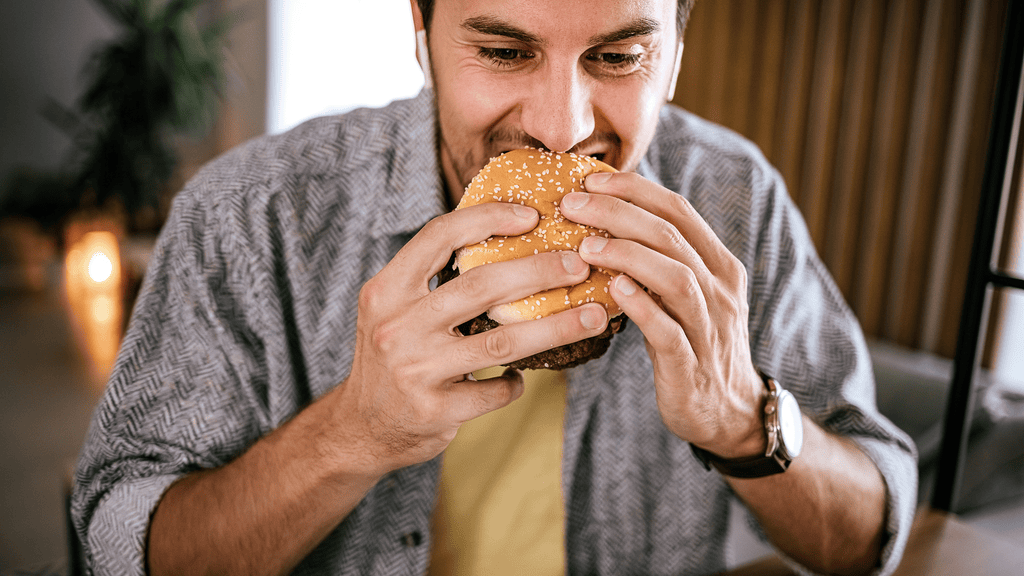
For some men, choosing between meat and plant-based food goes beyond what is on the plate. Food can be linked to identity, social norms and ideas about masculinity.
In our latest Consumer Insights, we look at recent scientific research into meat, masculinity and plant-based eating. What can food brands, retailers and QSRs learn from it?
For some men, food choice is also identity
In many Western food cultures, meat has long been associated with strength, status and masculinity. As a result, eating less meat can feel like more than simply making a different food choice.
A 2024 scoping review of 39 studies found a consistent relationship between masculinity, meat consumption and attitudes towards veganism.

What we eat can also communicate who we are.

This does not mean that every man needs meat to feel masculine. However, research shows that men who strongly identify as meat eaters are more likely to see themselves as more masculine, experience greater social pressure to eat meat and perceive plant-based diets as less masculine.
The stronger the meat-eater identity, the greater the potential resistance to plant-based eating.
Perception can start before the first bite
What did the researchers investigate?
Another study shows how strongly framing can influence the way consumers evaluate a product. Participants were shown identical food images. Only the label changed. The same product was presented once as regular meat and once as plant-based meat. The outcome was striking.
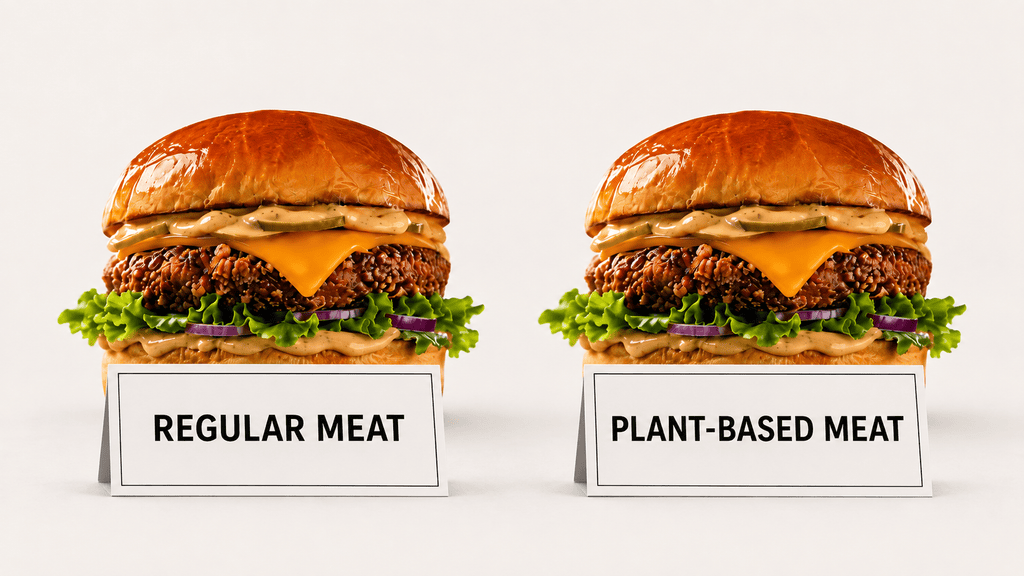
When the product was presented as regular meat, it was perceived as more masculine, generated stronger sensory expectations and received a higher product evaluation. When it was labelled as plant-based meat, participants experienced greater psychological distance and gave it a lower product evaluation.
The product did not change. Only the story around it changed.
This shows that consumers can sometimes evaluate a plant-based product differently before they have even taken a bite.
Making plant-based more masculine is not automatically the solution
An obvious response might be to position plant-based food more explicitly as masculine. Researchers tested that too. Plant-based meals were paired with highly masculine role models, including a bodybuilder and a successful entrepreneur. Researchers then examined whether this framing made men more positive about plant-based eating. It did not.
The three conditions:
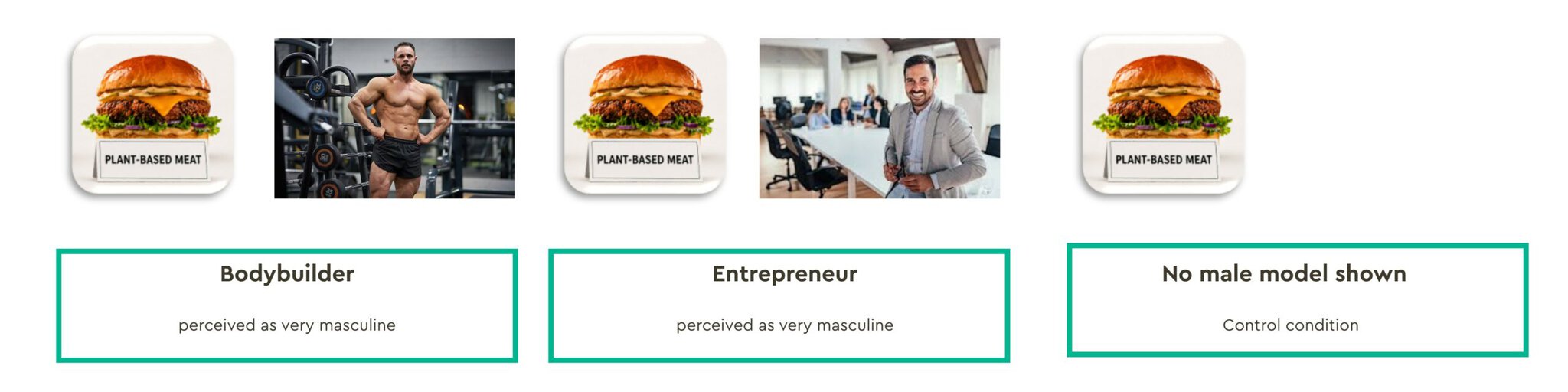
Masculine framing did not significantly improve attitudes towards plant-based diets or willingness to choose them. Simply adding a tougher image therefore does not appear to be enough to remove potential psychological barriers.
Sell the eating experience, not the sacrifice
This creates an interesting lesson for food brands, retailers and foodservice companies. Communication about plant-based products often starts with arguments such as sustainable, vegan, meat-free or conscious choice. These are relevant attributes, but they do not always need to be the first reason why someone wants to eat a product.

What happens if you start with:
- crispy
- juicy
- spicy
- grilled
- loaded
- high in protein
Then the focus shifts from the consumer’s identity to the eating experience. The research therefore suggests a different order in communication:
Lead with desire. Support with purpose.
Sustainability still matters. But it does not always need to lead the choice.
What does this mean for QSRs and food brands?
These research findings point to four interesting directions for product development, positioning and communication.
01. Make it irresistible
Show first why someone would want to eat the product. Taste, juiciness, bite, preparation and visual appeal deserve a prominent role. Consumers should not first need to be convinced by plant-based before the product itself becomes attractive.

02. Build around familiar eating occasions
Position plant-based products within familiar eating occasions and dishes. Think lunch, burgers, snacks, sharing and comfort food. The more familiar the occasion, the less plant-based needs to feel like a separate food world.

03. Reduce identity signalling
Voorkom waar mogelijk dat de keuze voor een product voelt als een statement over wie iemand is of zou moeten zijn. Niet iedere consument wil zich identificeren als veganist, vegetariër of zelfs flexitariër. Dat hoeft ook niet nodig te zijn om regelmatig voor een plantaardig product te kiezen.
04. Make plant-based completely normal
Place plant-based products alongside other tasty options and treat them as full-fledged food products in the range, on the menu and in communication. The more easily plant-based fits into familiar food culture, the lower the psychological barrier can become.
The challenge may not be the product itself
One important conclusion from the research is that men do not necessarily reject the plant-based product itself.
What may also matter is what they think choosing that product says about them.
For brands and producers, that offers perspective. The solution does not have to be changing consumers or asking them to adopt a new identity.
It starts with developing and presenting products that are appealing enough to be chosen simply because people want to eat them.
Put taste, desire and the eating experience first, so choosing plant-based feels like choosing great food rather than choosing an identity.
Great plant-based products should not ask consumers to become someone else. They should simply be so tasty and appealing that people want to choose them.

Boost your knowledge of the plant-based market!
Subscribe to our mailing and receive quarterly updates with exclusive market insights. You will also receive mailings with our latest plant-based innovations.
Join the hundreds of industry professionals who have already signed up before you.